Erik Lehmann · 28 September 2026
Meadow Microbial Alliances: Yarrow's Part in Soil Network Formation During Recovery Phases
Researchers have documented how yarrow integrates into soil systems during meadow recovery, where it supports microbial community shifts through root exudates and associations with fungi and bacteria. Field observations from multiple regions show that Achillea millefolium often appears early in succession after disturbances such as grazing pressure, drought cycles, or agricultural abandonment, and its presence correlates with measurable changes in soil aggregate stability and nutrient cycling rates.
Soil Network Basics in Disturbed Meadows
Soil networks form through hyphal connections and bacterial biofilms that link plant roots to nutrient pools, and data from long-term plots indicate yarrow accelerates this process by releasing specific carbon compounds that favor arbuscular mycorrhizal fungi. Studies in North American grasslands reveal higher fungal-to-bacterial ratios where yarrow density increases, while similar patterns appear in European sites monitored by national agricultural agencies. These alliances help rebuild pathways for phosphorus and nitrogen transfer, especially in the first two to three growing seasons after site disturbance.
Yarrow Root Interactions and Microbial Recruitment
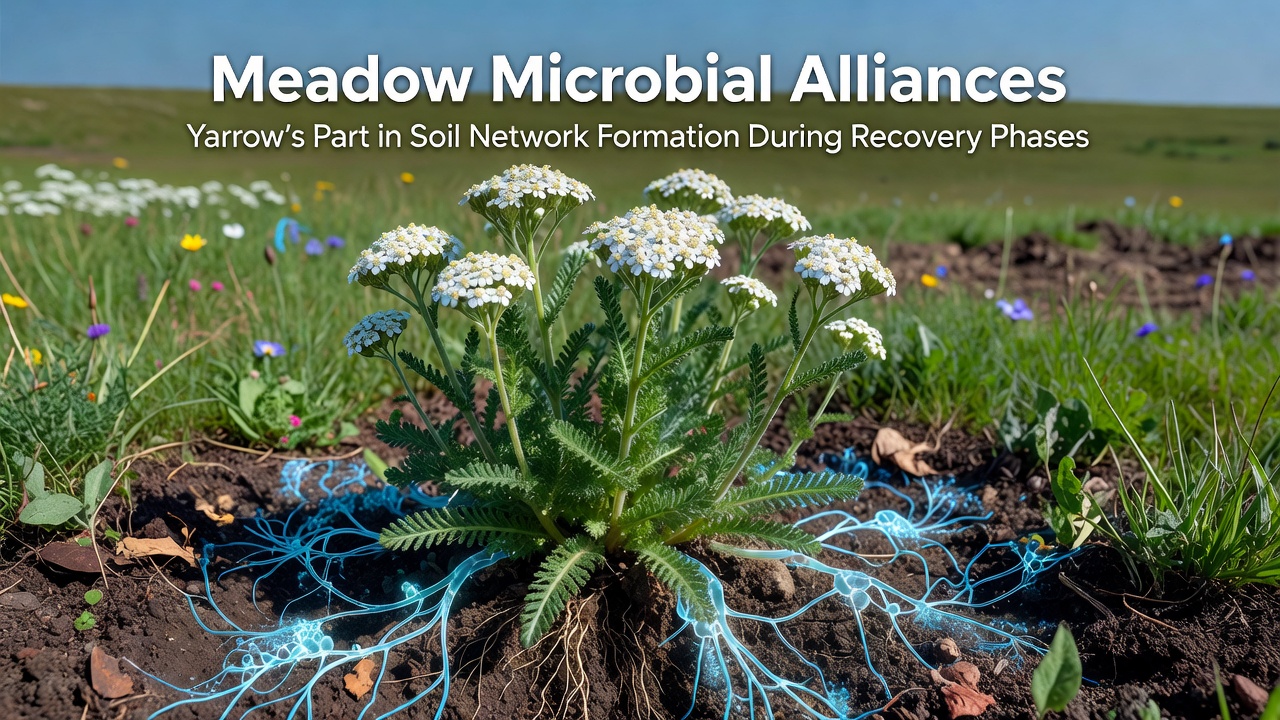
Yarrow develops extensive lateral roots that exude phenolic compounds and sugars, which researchers link to selective enrichment of beneficial microbes including Glomus species and nitrogen-fixing bacteria. In recovery phases, these exudates coincide with reduced soil compaction and increased water infiltration, as measured in Canadian prairie restoration trials. Observers note that yarrow patches frequently host more diverse protist communities than surrounding bare ground, suggesting the plant acts as a hub for trophic interactions that stabilize the emerging network.
September 2026 monitoring reports from several ongoing projects show continued yarrow expansion in post-wildfire meadows across the western United States, where soil core samples collected that month documented elevated glomalin levels near yarrow crowns compared with control areas without the species. Such findings align with earlier data collected by the United States Department of Agriculture on soil health indicators in recovering rangelands.
Comparative Recovery Across Regions
Recovery trajectories differ by climate and prior land use, yet yarrow consistently appears in transitional phases across temperate zones. In Australian grassland studies, the plant has been recorded aiding microbial recolonization after prolonged drought, with root zone samples showing rapid increases in actinomycete populations. European researchers tracking similar sites report parallel outcomes, where yarrow presence correlates with faster return of soil enzyme activity linked to decomposition. These patterns suggest the species contributes to network resilience regardless of exact geographic starting conditions.
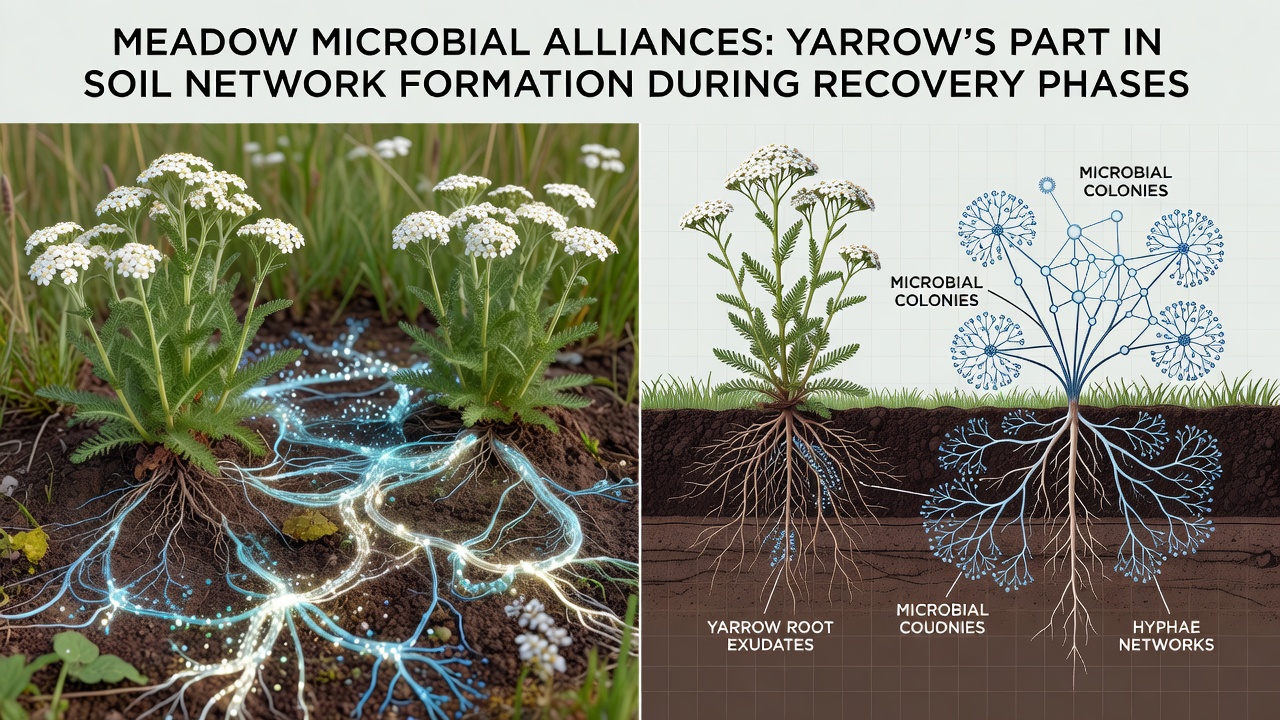
What's notable is how yarrow modifies local pH gradients around its rhizosphere, creating microhabitats that support both acid-tolerant and neutral microbes simultaneously. This dual support expands the functional range of the soil network during the vulnerable early recovery window, when many other forbs remain sparse. Data collected from replicated plots confirm that microbial biomass carbon rises more steeply under yarrow canopies than in adjacent areas dominated by grasses alone.
Nutrient Cycling Contributions
Once established, yarrow participates in phosphorus solubilization through associations with specific bacterial strains, and isotope tracing experiments demonstrate direct transfer of labeled nutrients from yarrow roots into neighboring plants via common mycorrhizal networks. In recovery phases this sharing effect helps maintain plant diversity while soil structure rebuilds. Government monitoring programs in multiple countries have recorded corresponding declines in erosion rates once such networks reach critical density, typically within four to five years of initial colonization.
Conclusion
Evidence accumulated from field studies across continents shows yarrow playing a measurable role in soil network formation during meadow recovery, primarily through root-mediated microbial recruitment and nutrient pathway development. Continued observation through 2026 and beyond will clarify how these alliances scale under changing climate conditions, yet current datasets already establish the species as a consistent contributor to soil stabilization processes in disturbed grassland systems.