Casey Keller · 14 September 2026
Tracing Yarrow's Role in Building Resilient Meadow Networks Over Time
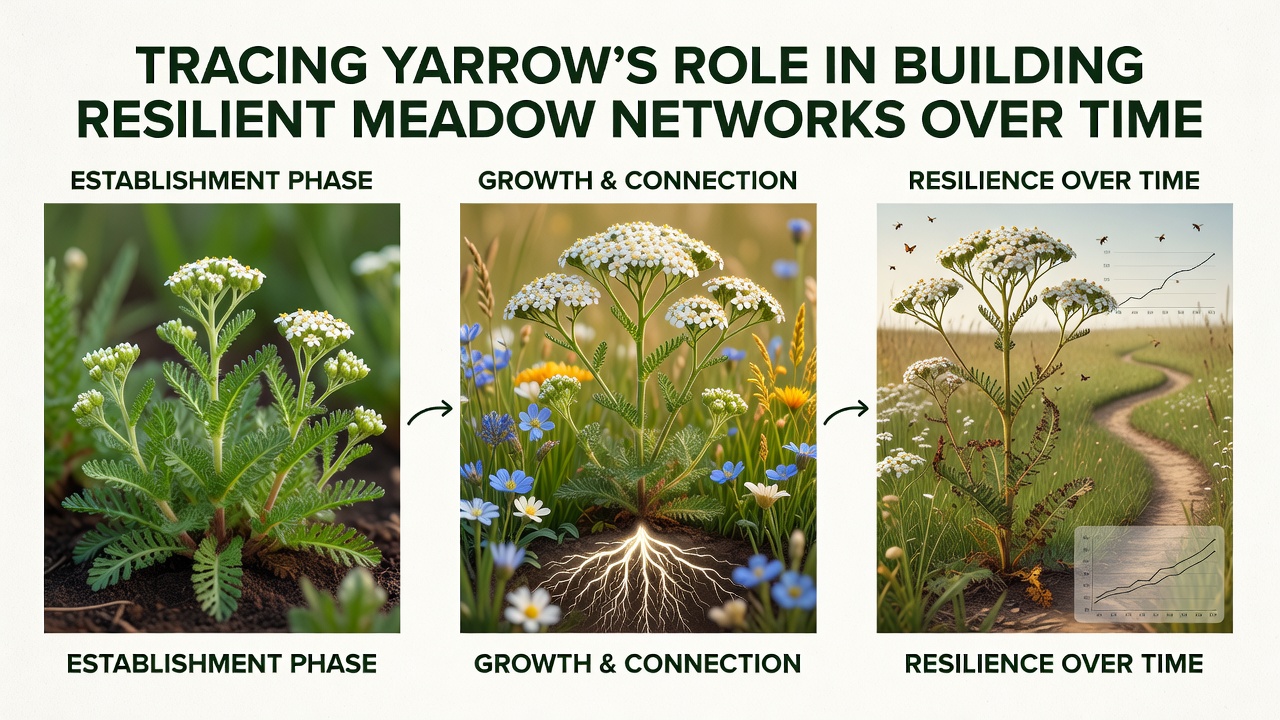
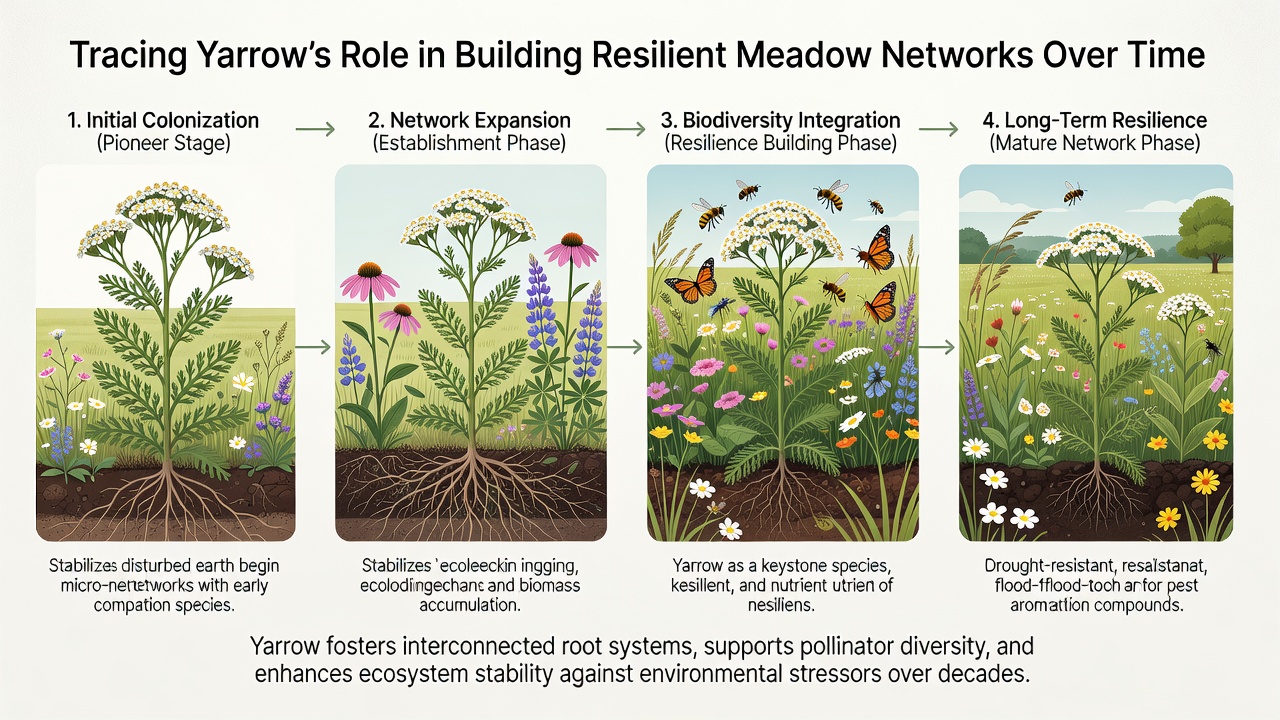
Yarrow, or Achillea millefolium, has contributed to meadow stability across temperate regions for centuries through its perennial growth habit and extensive root systems that bind soil particles while cycling nutrients back into the surface layers. Researchers tracking plant communities in restored grasslands note that yarrow often colonizes disturbed patches early, creating microhabitats that later support grasses and forbs as succession advances. Data from long-term monitoring plots show these networks gain resistance to drought and erosion when yarrow density reaches moderate levels, typically between 15 and 25 percent cover.
Historical Patterns in Meadow Establishment
Archaeological evidence and historical land records indicate yarrow appeared in European hay meadows by the medieval period, where farmers valued its persistence under regular cutting regimes. Studies of pollen cores from North American prairie sites reveal similar patterns after European settlement, when yarrow accompanied seed mixes used for pasture improvement. Those who've examined seed bank samples from the 1800s find yarrow seeds remaining viable for decades, allowing the species to reappear after tillage or grazing pressure subsides.
By the mid-20th century, agricultural experiments in Canada and Australia tested yarrow alongside native grasses to reduce erosion on slopes, and results demonstrated faster ground cover compared with grass-only sowings. Observers recorded that yarrow's taproots penetrated compacted layers, improving water infiltration rates by up to 30 percent within three growing seasons according to field measurements compiled by the United States Department of Agriculture.
Ecological Mechanisms Supporting Network Resilience
Yarrow produces both vegetative spreads and wind-dispersed seeds, which together help maintain connectivity among meadow patches even when management practices vary. Its flowers supply nectar across an extended season, sustaining pollinator populations that in turn aid reproduction of co-occurring plant species. Chemical analyses of root exudates show compounds that influence soil microbial communities, fostering associations that enhance nutrient uptake for neighboring plants during nutrient-poor periods.
Long-term studies in the European Union biodiversity monitoring program have tracked how meadows containing yarrow recover biomass after extreme weather events more rapidly than those dominated by fewer species. Figures reveal that plots with established yarrow retained 40 percent more soil organic matter after two consecutive dry summers than control areas lacking the herb. This pattern holds across different soil types, from sandy loams in the Midwest United States to clay-heavy sites in southern Australia.
Contemporary Restoration Applications
Restoration practitioners in 2025 and into September 2026 continue to incorporate yarrow in seed mixes for projects aimed at reconnecting fragmented grasslands. Government agencies in New Zealand have documented successful use of the species on roadside verges, where it reduces maintenance costs while supporting insect diversity. Similar initiatives in South Africa test yarrow cultivars selected for local climate tolerance, and preliminary reports indicate improved survival rates during variable rainfall years.
Network modeling based on field data suggests that yarrow's role becomes more pronounced as meadow size increases, because its clonal growth helps bridge gaps between isolated plant clusters. Researchers using remote sensing in the Canadian prairies have mapped these connections and found corridors containing yarrow exhibit lower rates of invasive species establishment over five-year intervals.
Future Monitoring and Data Collection
Continued observation through 2026 focuses on how changing temperature regimes affect yarrow phenology and its interactions within meadow networks. Automated sensors installed in several long-term plots now record soil moisture and root activity year-round, generating datasets that allow comparison across continents. These efforts build on earlier work by providing higher-resolution information about seasonal contributions to overall system stability.
Conclusion
Evidence accumulated over decades demonstrates yarrow's consistent participation in meadow development from initial colonization through long-term maintenance phases. Its biological traits align with requirements for soil stabilization, pollinator support, and recovery after disturbance, features that strengthen network resilience across varied geographic settings. Ongoing data collection will refine understanding of how these contributions shift under future environmental conditions.